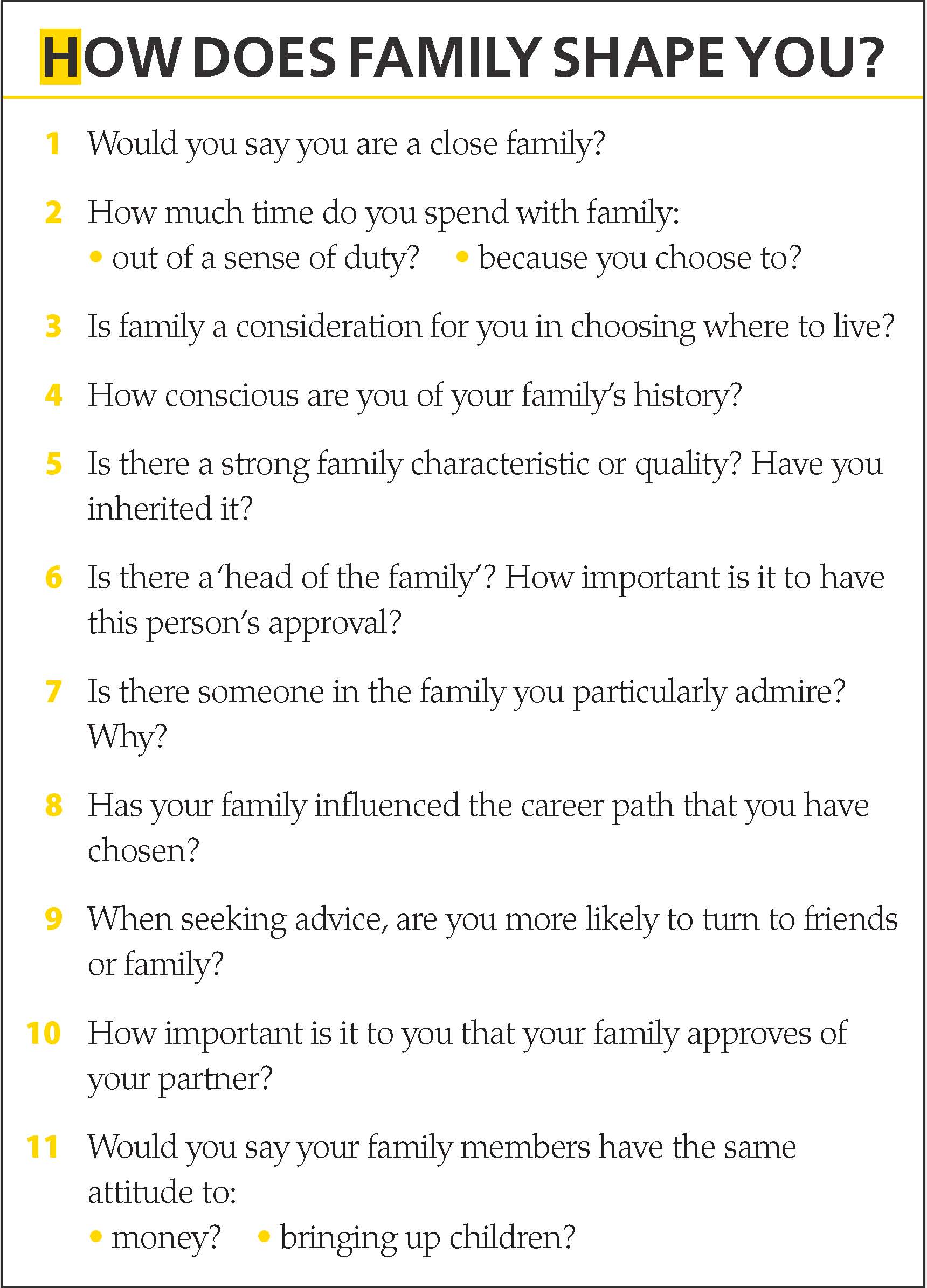
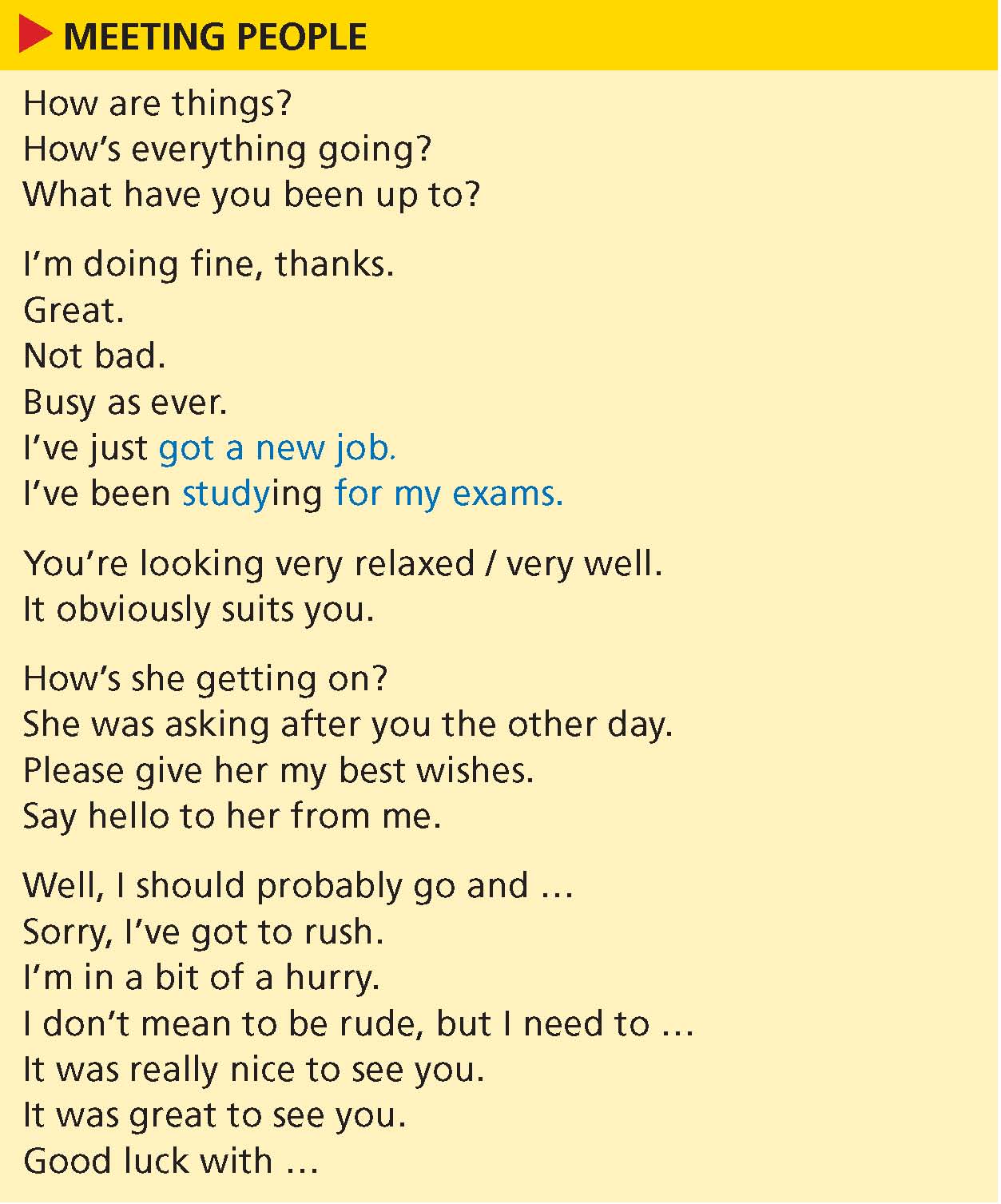
Real life meeting people
1 Work in pairs. Which phrases would you use to:
a greet someone for the first time?
b greet someone you know in a formal context?
c greet someone you know as a friend?
How are things? How do you do?
How are you? How’s it going?
Pleased to meet you.
2

 Listen to a conversation in the street between
two friends, Tim and Greta. Answer the questions.
Listen to a conversation in the street between
two friends, Tim and Greta. Answer the questions.
1 When did Tim and Greta last see each other?
2 What have Tim and Greta been doing since
they last met?
3 What future arrangement do they make?
3

 Listen to the conversation again. Tick the
expressions for meeting people the speakers use.
Listen to the conversation again. Tick the
expressions for meeting people the speakers use.

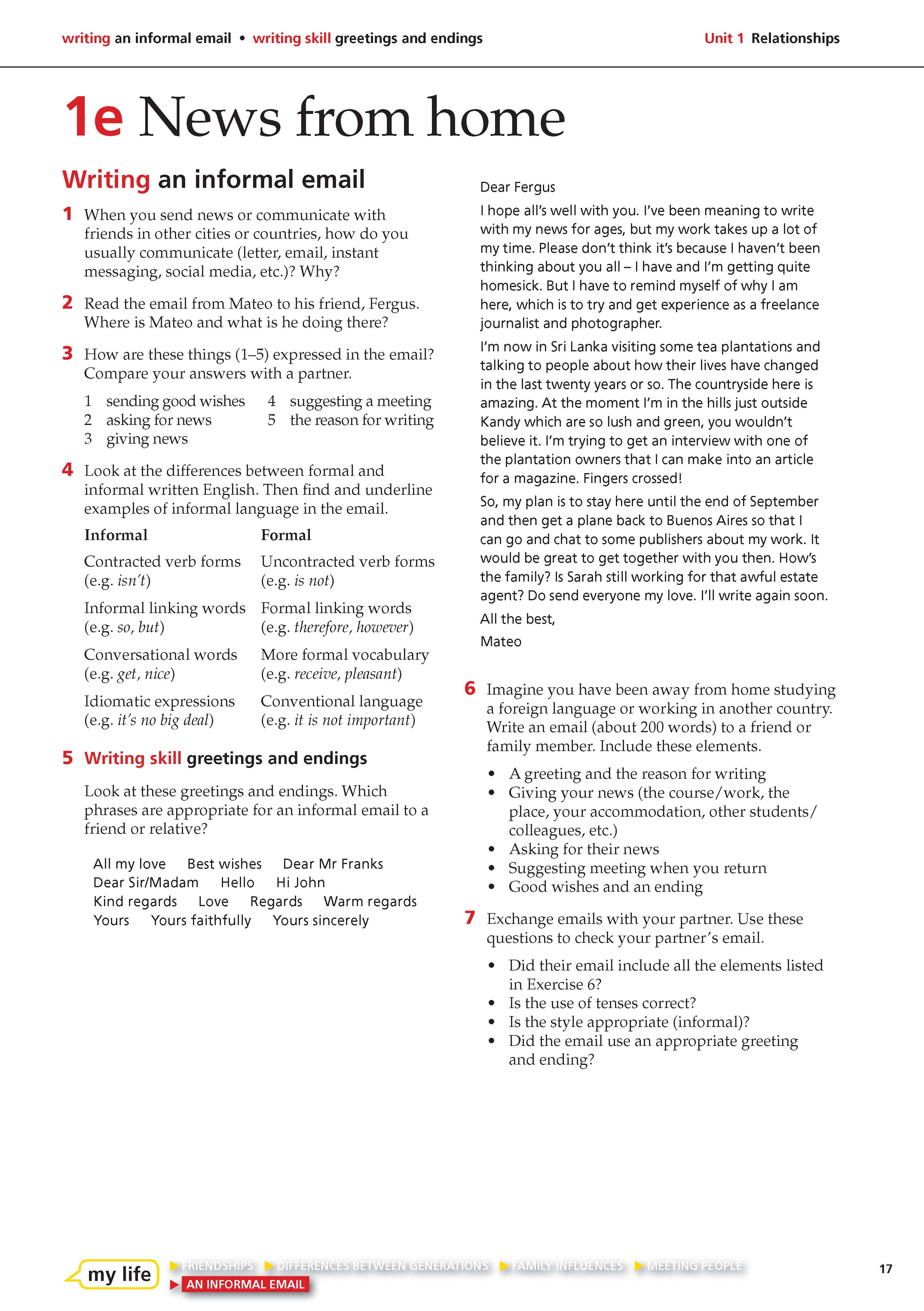
5 Pronunciation word boundaries a


so the word boundaries become more difficult to hear. Listen to eight expressions and write expressions 5–8.
1 How are things?
2 How’s everything going?
3 What have you been up to?
4 I haven’t seen you for ages.
5
6
7
8
4 Match the expressions you ticked in Exercise 3 b Work in pairs. Practise saying the common
with these functions (1–5). expressions in Exercise 5a in the same way.
1 how Greta asks Tim for his news
2 what Tim says about Greta’s appearance
3 how Greta describes her life
4 what Greta says about Amanda, their
mutual friend
5 how Greta says she can’t continue the
conversation
6 Imagine you are in a large shopping centre during a lunch break. Walk around and ‘bump into’ other people that you know. Find out what each person has been doing, and make a future arrangement. Then move on until you bump into someone else. Use the expressions for meeting people to help you.

FRIENDSHIPS
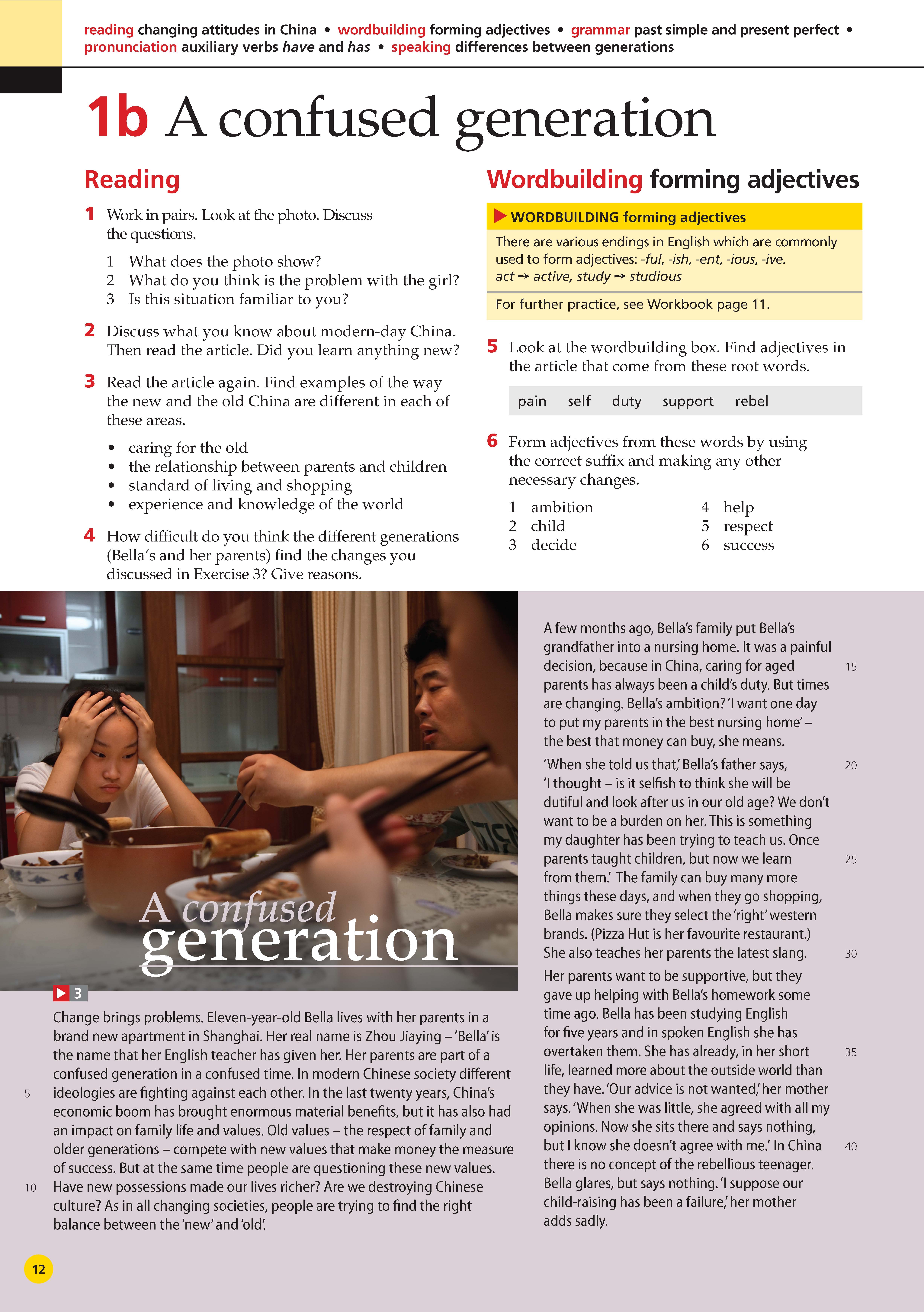
 DIFFERENCES BETWEEN GENERATIONS
 FAMILY INFLUENCES
AN INFORMAL EMAIL



Unit 1 Relationships
 Watch the second part of the video (1.34–
Before you watch 5
2.54) again. We hear the stories of descendants of 1 Read the description of the video and answer US immigrants. Make notes to complete the table.
the questions.
1 Why was the island closed to visitors?
2 Who are we going to hear speaking on the video?
December 26, 2013: Ellis Island has recently
reopened to visitors, following significant damage
from Hurricane Sandy. Stewards and visitors
describe the importance of the island to them.
| Visitor | Where their ancestors came from | How they feel at Ellis Island |
|---|
| 1 Judith | | |
| 2 Pablo | | |
| 3 Peter | | |
| 4 Raea | | |
6
 Watch the third part of the video 2 Key vocabulary (2.54 to the end) again. Choose the correct options to complete the facts.
a Read the sentences. The words in bold are used in the video. Guess the meaning of the words. 1 At its busiest point, Ellis Island processed up to 12,000 immigrants a day / a month.
1 There are a lot of new houses in the town, but 2 Now, in the summer months, Ellis Island
there is no infrastructure to support them. receives over / up to 22,000 visitors per day.
2 The building needs some renovation, but it is 3 The storm, Hurricane Sandy, destroyed the
basically in good condition.
3 It takes four weeks to process a new
passport application.
renovated buildings / the infrastructure. 4 The stewards saw the storm as an opportunity to improve the park / the statue.
4 It was a very moving sight, seeing the families
greet each other after so long apart.
5 I have faith in people to do the right thing. After you watch
b Match the words in bold in Exercise 2a with 7 Vocabulary in context these definitions.
a


a deal with using an official procedure
b the process of making something look new
again
c a strong belief (in something)
d communications and services that support
a place (e.g. a town or country)
Watch the clips from the video. Choose the correct meaning of the words and phrases.
b Complete the sentences in your own words. Then compare your sentences with a partner.
1 My … means the world to me. 2 I showed up late for …
e producing strong emotion 3 It was very gutsy of … to …
 8 Think of two monuments or places of national interest in your country. Then work in pairs and
3

 Watch the video. Answer the questions. ask and answer these questions.
1 Who came to Ellis Island in the past?
2 Who visits it today?
3 Was the Statue of Liberty damaged by the
storm?
1 What is the name of the monument or place?
2 How would you describe it?
3 What does it mean to people from your country?
4 Do you like it and have you visited it? Why? /
Why not?
4
Watch the first part of the video (0.00–1.33) again. Then answer the questions with your partner.  9 Prepare a brief guide for immigrants to your country. Write down at least six key points. 1 David Luchsinger is a steward of ‘Liberty Include things like local eating habits, cultural
Island’, but how does he describe himself? habits, transport advice, etc.Complete the phrase ‘the last ’. 2 Apart from being a steward, what is his 10 Work in groups. Compare your ideas from personal connection to Ellis Island? Exercise 9. Do you think it is difficult for someone 3 What did the bags that immigrants carried with new to adapt to life in your country? Why? / them contain? Why not? 4 What were they asked to do with the bags?
defiant (adj) /dɪˈfaɪənt/ refusing to be beaten
5 What is David Luchsinger proud of, in relation to the bags? sends chills down your spine (v) /sendz ˈtʃɪlz daʊn jə ˈspaɪn/
makes you frightened or excited steward (n) /ˈstjuːə(r)d/ a person employed to look after a particular place

UNIT 1 REVIEW AND MEMORY BOOSTER
Grammar Vocabulary
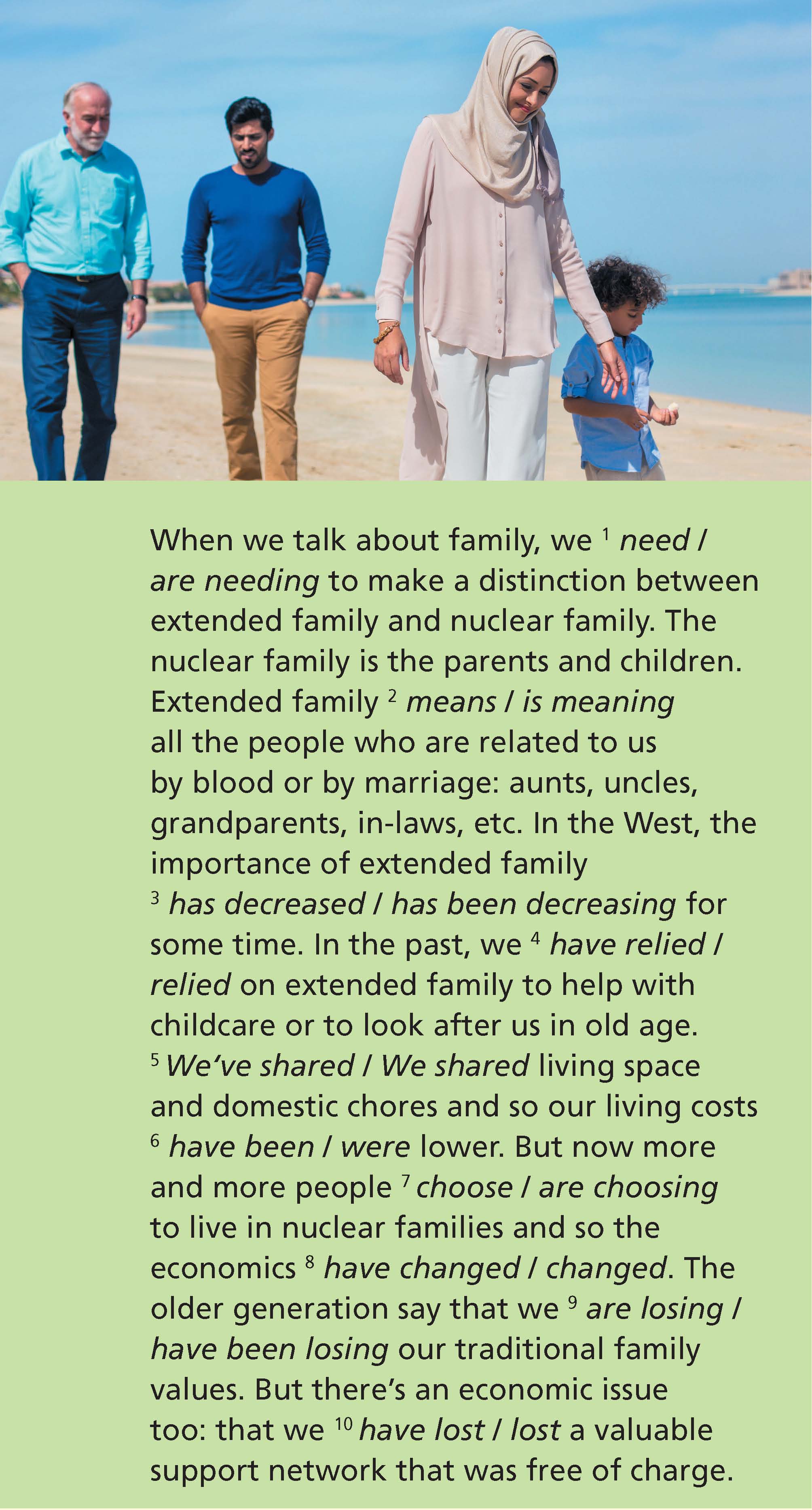
1 Choose the correct verb forms to 4 Complete the words and phrases in bold to make definitions complete the article about family. of different relationships. Someone who:
1 you go on a trip with is a travel com . 2 you can really depend on is a e friend. 3 you and another friend both know is a ual friend. 4 you share an apartment with is a flat . 5 you know but who is not really a friend is
an tance. 6 you are related to by birth to is a b relative.
5

Use the relationships in Exercise 4. Describe someone:
1 who you hang out with regularly. 2 who you haven’t kept up with. 3 whose house you go round to regularly.
6

considerate dependable energetic good fun laid-back outgoing selfish serious shy unreliable
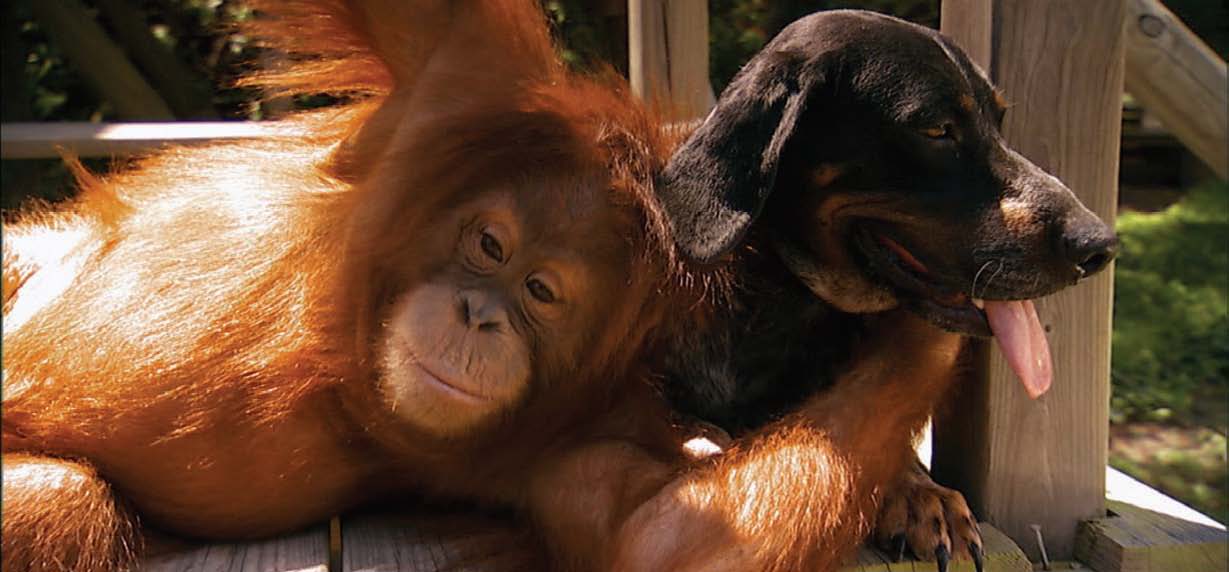
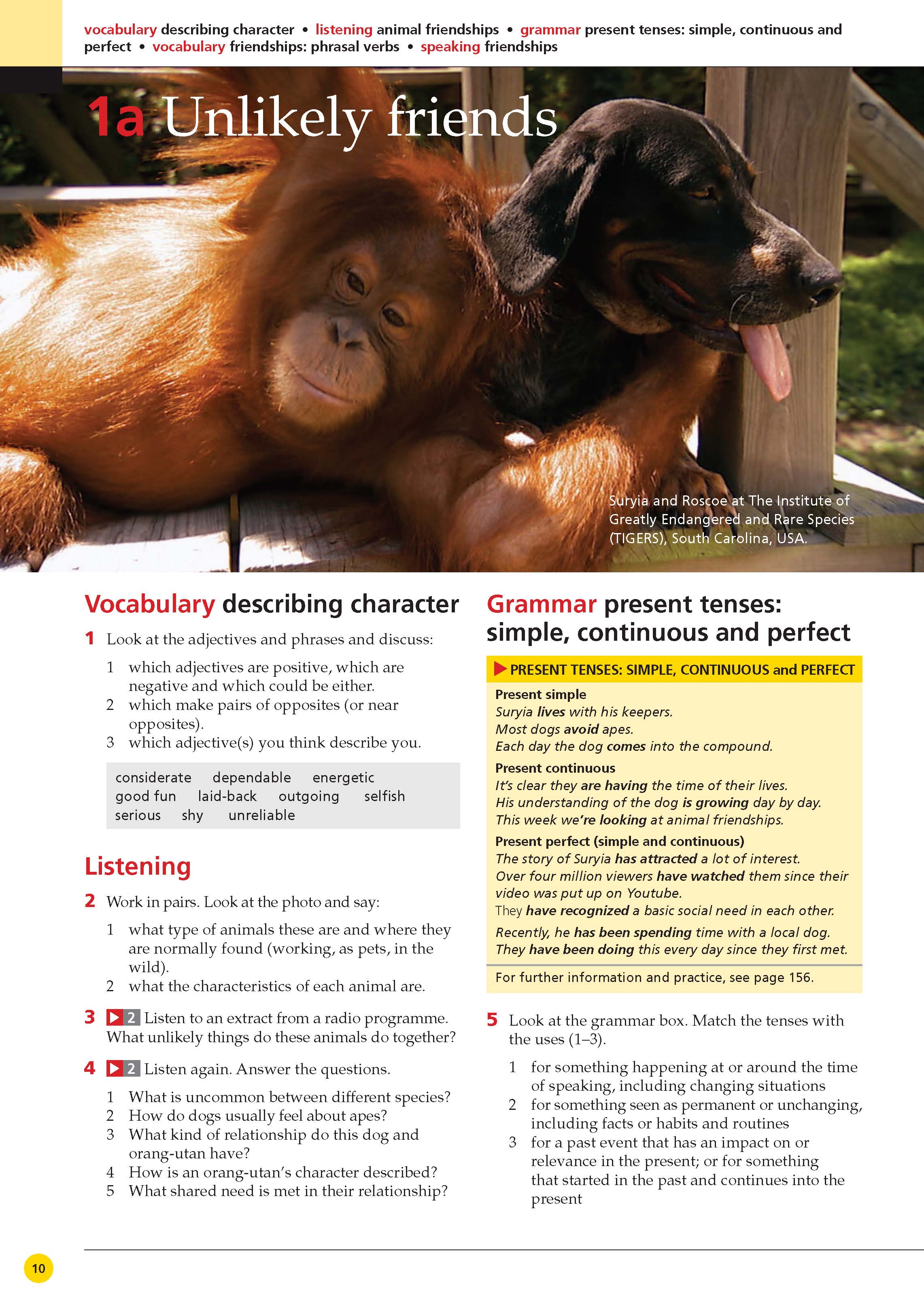
1 Which adjectives describe these animals from Unit 1a? Why? 2 Choose three adjectives to describe three of your relatives. Tell your partner and give an example to illustrate each one.

Real life
7 Complete the phrases using a preposition or particle.
- L:
- Hello Jim. How are you?
- L:
- Yeah, that’d be nice. I’m 1
a bit of a hurry now, but I’ll call you.
- L:
- I’ve been working in New York 2
the past month.
- L:
- Oh, well, please give her my best wishes.
2 Answer the questions.
1 What is the difference between a
nuclear and an extended family?
2 What benefits of an extended
family does the writer mention?
L: Thanks. You too. How’s Sarah getting 3 ?
L: Thanks. Well, it was great to see you.
J: Yes, do. And good luck 4 the work in New York.
J: She’s fine. Still studying hard.
J: That’s exciting. You’re looking very well.
J: I will. Maybe we can all get 5 some time soon.
 J: Great, thanks. It’s been ages. What have you been 6 to?
3 8 Put the sentences from Exercise 7 in the correct order to make 1 Can you explain your choice of a conversation between Laura (L) and Jim (J). Start with:
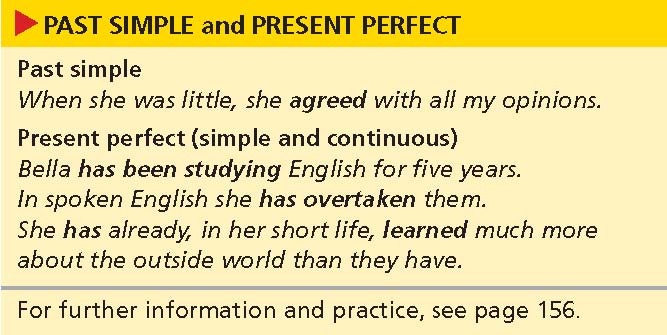
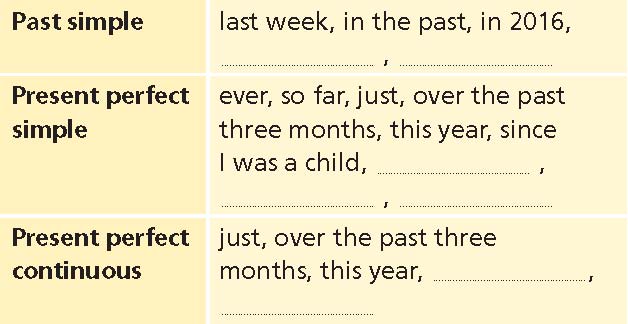
tense for items 3–8 in Exercise 1?
2 What other time phrases would
fit grammatically instead of
for some time (item 3) and in the past
(item 4)? Think of two for each.
L: Hello Jim. How are you?
9 see the first two or three words of each line. Then act out the full conversation.





 DIFFERENCES BETWEEN GENERATIONS
 FAMILY INFLUENCES
 MEETING PEOPLE




 FAMILY INFLUENCES
 MEETING PEOPLE


 my life